How AI Is Changing Small Business Bookkeeping
This is a subtitle for your new post
Introduction
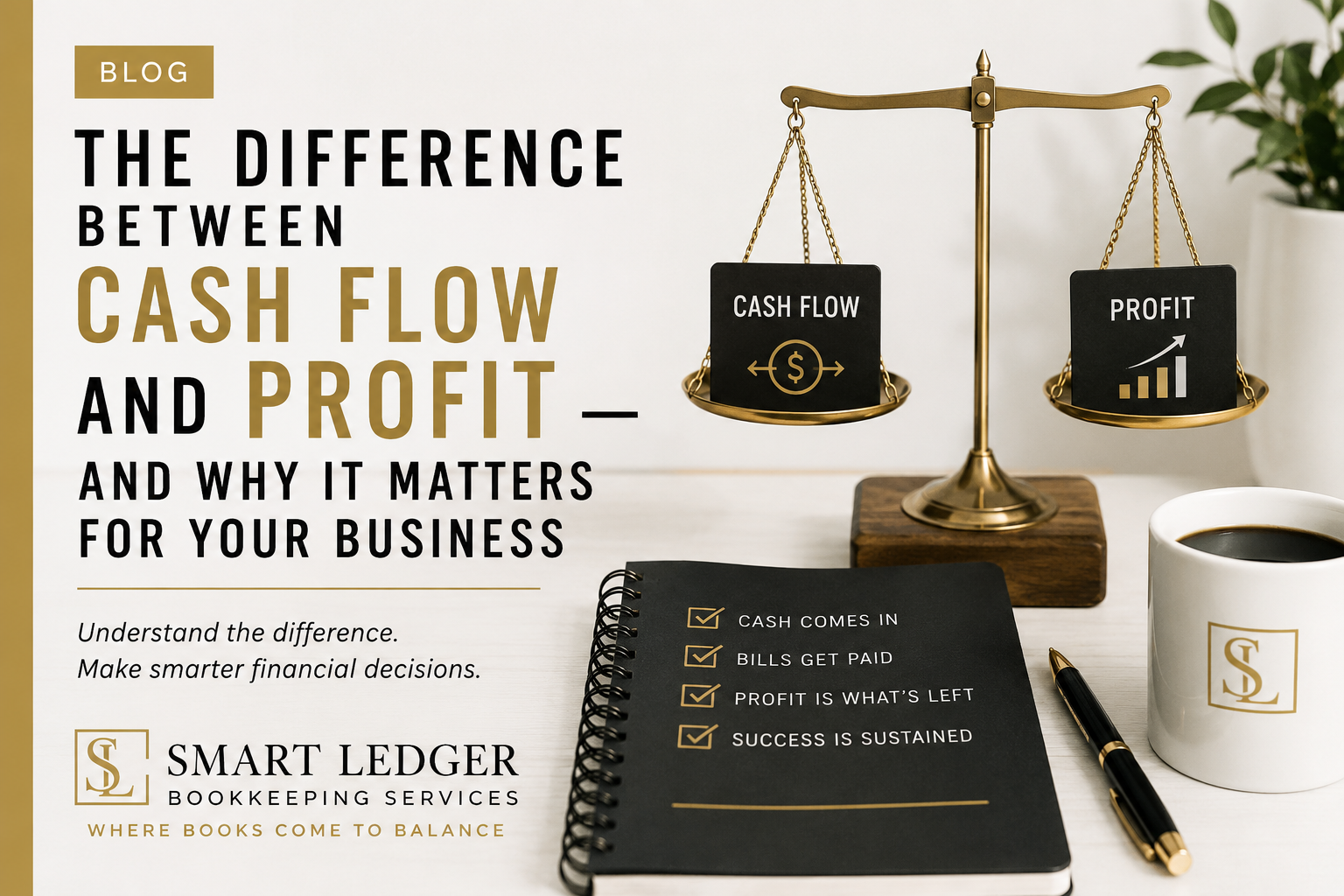
If you have ever looked at your income statement and felt confident about your business, only to open your bank account and feel confused — you are not alone. This disconnect happens to small business owners constantly, and it almost always comes down to one misunderstood distinction: cash flow is not the same thing as profit.
Understanding both numbers is not just an accounting exercise. It is one of the most important financial skills a business owner can develop. And once you understand the difference, the way you manage your business will change.
What Is Profit?
Profit is what remains after you subtract your expenses from your revenue. It lives on your income statement and tells you whether your business is making more money than it is spending.
There are two types:
Gross profit is your revenue minus the direct cost of delivering your product or service. Net profit is what is left after every expense — including overhead, taxes, and operating costs — has been subtracted.
Profit is important. It tells you whether your business model is working. But profit is a snapshot of your financial performance over a period of time. It does not tell you what is in your account right now.
What Is Cash Flow?
Cash flow is the movement of money in and out of your business in real time. It tracks when money actually arrives and when it actually leaves — not when it was earned or when an expense was incurred.
Positive cash flow means more money is coming in than going out. Negative cash flow means the opposite — and it can happen even when your business is technically profitable.
Why You Can Be Profitable and Still Run Out of Cash
This is where many business owners get caught off guard. Here are the most common scenarios:
You invoiced a client for work you completed, but they have not paid yet. Your books show the revenue. Your bank account does not.
You paid for supplies, equipment, or services upfront that will not generate income for 60 or 90 days.
You have a loan payment, payroll, or rent due this week, but your receivables are not scheduled to come in until next month.
In all of these situations, your profit looks fine on paper. But your cash flow is the problem that keeps you up at night.
The Metric That Actually Runs Your Business
Day to day, cash flow is what keeps your business operational. You cannot pay your employees with profit. You cannot cover your rent with profit. You pay those obligations with cash.
This is why monthly bookkeeping is not optional for a growing business. When your books are current, you can see both numbers clearly — your profitability trend and your actual cash position — and make decisions based on the full picture.
Without that visibility, you are guessing. And guessing with your business finances is how small cash flow problems turn into emergencies.
What to Track Every Month
At Smart Ledger, we recommend every business owner review these three things monthly:
Your net profit for the month — are you making money after all expenses?
Your cash flow statement — what came in, what went out, and what is the net movement?
Your accounts receivable aging report — who owes you money and how long have they owed it?
These three reports together give you a complete financial picture. Not just whether your business is profitable, but whether it is financially healthy.
The Bottom Line
Profit tells you if your business model works. Cash flow tells you if your business survives.
You need both numbers. And you need them updated every single month — not at tax time, not when you are applying for a loan, not when something goes wrong.
If your books are not current or you are not reviewing these reports regularly, that is where we start.
Smart Ledger helps small business owners build the financial systems and reporting routines that keep both numbers visible, accurate, and actionable all year long.
Ready to get your books in order? Visit www.smartledgerbookkeepingservices.com to learn more or book a free consultation.
Where Books Come to Balance.