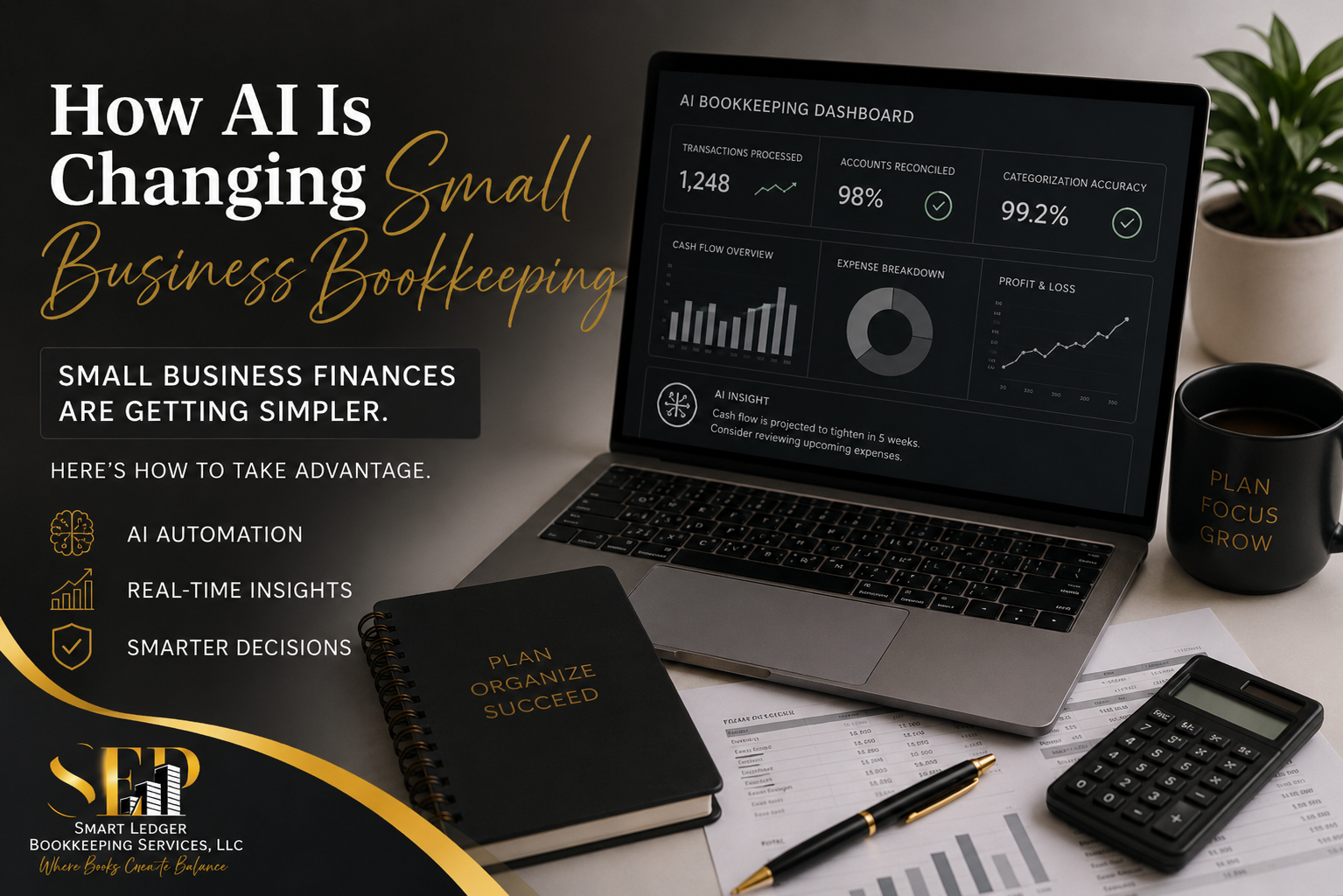
How AI Is Changing Small Business Bookkeeping
If your books are a mess, your business is running blind. Here is what to fix first.
Real estate agents are excellent at closing deals. Bookkeeping is a different story.
Most agents enter the industry focused on listings, clients, and commissions — not financial records. But the way you manage your books directly affects your tax liability, your cash flow, and your ability to grow. The good news is that the most common mistakes are also the most fixable.
Here are five bookkeeping mistakes real estate agents make every year — and what to do instead.
1. Mixing Personal and Business Finances
Using one bank account for both personal expenses and business income is one of the most common mistakes agents make. It creates confusion at tax time, makes it nearly impossible to track business profitability, and puts you at risk during an audit.
The fix is simple: open a dedicated business checking account and use it exclusively for business income and expenses. Every commission deposit and every business expense runs through that account — nothing else.
2. Not Tracking Business Mileage
Real estate agents drive constantly — showings, client meetings, open houses, errands for closings. Every mile driven for business purposes is a deductible expense, but only if you track it.
Most agents leave hundreds or even thousands of dollars on the table every year simply because they never recorded their mileage. Use a mileage tracking app or keep a written log. It takes less than thirty seconds per trip and pays off significantly at tax time.
3. Waiting Until Tax Season to Reconcile
Reconciling your accounts once a year — right before your tax deadline — is a recipe for stress, errors, and missed deductions. Twelve months of unorganized transactions take significantly longer to sort through, and mistakes are far more likely.
Monthly reconciliation keeps your records current, catches errors early, and makes tax preparation straightforward rather than overwhelming. If reconciling monthly feels unmanageable, that is a clear sign it is time to bring in a professional bookkeeper.
4. Miscategorizing Commission Income and Expenses
Not all income is categorized the same way, and not all expenses qualify for the same deductions. When transactions are miscategorized — even unintentionally — it affects your profit and loss statements, your tax filings, and your financial reporting.
Common miscategorizations for agents include marketing expenses, desk fees, continuing education costs, and technology subscriptions. Each of these has a correct category. Getting it right from the start saves you from corrections later.
5. Having No System at All
The most costly mistake is not having a bookkeeping system in place. Without a consistent process for recording income, tracking expenses, and reviewing financial statements, you are running your business on guesswork.
A structured bookkeeping system does not have to be complicated. It needs to be consistent. Monthly reconciliations, organized transaction records, and clear financial reports give you the visibility to make confident business decisions — and to scale your income with intention.
Getting Your Books in Order
If any of these mistakes sound familiar, you are not alone — and it is not too late to fix them. Smart Ledger Bookkeeping Services works with real estate agents to build clean, organized financial systems that save time, reduce stress, and keep your business on solid ground.